
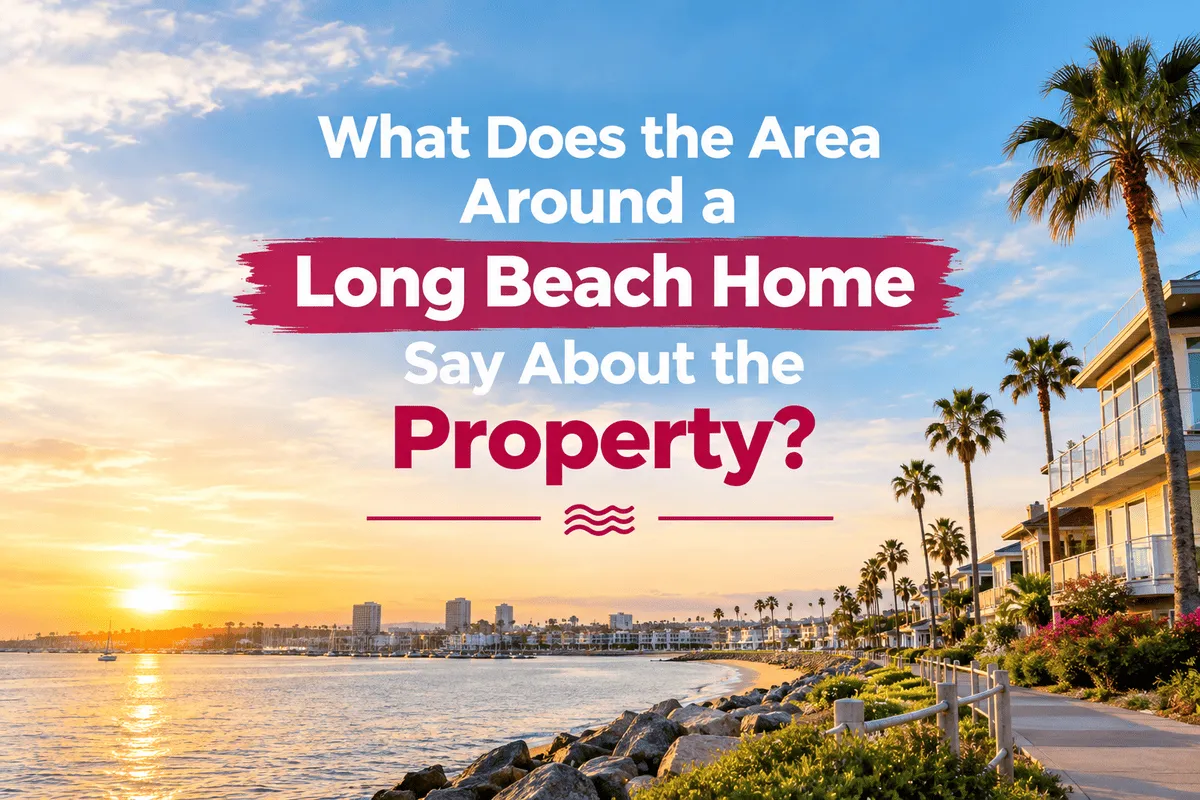
What Does the Area Around a Long Beach Home Say About the Property?
When looking at a Long Beach home, it is easy to focus on the kitchen, bedrooms, bathrooms, and other features inside the house. But a property does not exist by itself.
The street, neighboring homes, sidewalks, trees, parking, nearby services, and overall character of the surrounding area can all shape what it is like to own the property.
For buyers searching for a home in Long Beach, looking beyond the front door can provide another way to compare properties.
The Street Can Tell You More Than a Listing Photo
Start with the street itself.
When visiting a Long Beach property, take a few minutes to observe the area around the home.
Look at:
Street layout and width
Sidewalks and walkways
Street parking
Driveway access
Mature trees and landscaping
Distance between homes
General condition of surrounding properties
These details may not appear clearly in online photographs, but they can affect how the property feels in everyday use.
The goal is not to decide whether one type of street is better than another. It is to understand what you are actually buying.
Long Beach Has Distinct Neighborhood Character
Long Beach contains neighborhoods with different architectural and streetscape characteristics.
The city has designated historic districts including Belmont Heights, Bluff Heights, Bluff Park, California Heights, Carroll Park, Rose Park, and Wrigley, among others. These districts preserve groups of properties and streetscapes with historical and architectural significance.
For example, the city's description of California Heights notes period architecture along with mature trees and vintage streetlights. Bluff Park includes historic homes along the ocean bluffs, while Rose Park is known for its concentration of Craftsman Bungalows.
This makes the surrounding neighborhood an important part of understanding a Long Beach property.
Look at What Sits Next to the Home
A house may meet your requirements, but its immediate surroundings deserve attention too.
During a property visit, consider:
Neighboring properties:
Are the surrounding homes similar in scale and character to the property you are considering?
Outdoor space:
How close are neighboring structures? Does the property have the amount of outdoor separation you want?
Views:
What can you see from the main living areas, yard, driveway, and upper floors?
Noise:
What does the area sound like during the time you visit?
Parking:
Look at how parking is arranged around the property rather than relying only on the listing description.
These observations can help you understand the property as a complete setting.
Nearby Places Matter Too
The area around a home is not limited to the homes immediately next door.
Think about the places you would use regularly.
Depending on the property and your routine, you may want to consider access to:
Parks and recreational spaces
Schools
Shopping areas
Restaurants
Public transportation
Major roads
Community facilities
Everyday services
Long Beach is a large and varied city, so the experience of living in one part of the city can differ from another.
This is why an address should be considered in context rather than treated as simply a point on a map.
Check the Rules That Apply to the Property
The surroundings can also raise questions that are more practical than visual.
For certain Long Beach properties, buyers may want to determine whether the home is located within a historic district, coastal zone, parking-impacted area, or another designated area.
The City of Long Beach provides zoning and land-use maps that allow users to check information such as zoning, historic-district boundaries, coastal-zone status, and parking-related designations.
This does not mean that a particular designation is good or bad.
It means buyers should understand which rules and designations apply to the property they are considering.
What If the Long Beach Property Is Part of an Estate?
Some properties may be connected to an estate or probate process, which can involve additional considerations when a property is being prepared for sale. If you are handling a property in this situation, you can learn more about Long Beach probate real estate and the available services.
The Block Can Change Your First Impression
Two homes with similar interiors can feel very different when they sit on different blocks.
One may have mature landscaping and a traditional streetscape. Another may have a more open layout, different parking conditions, or a different mix of housing.
That is why it can be useful to visit a property more than once when possible.
Instead of asking only:
“Do I like this house?”
also ask:
“Does this block work for me?”
That question can reveal information that the interior alone cannot provide.
Historic Character Is Part of Long Beach's Residential Landscape
Long Beach's historic districts demonstrate how much the surrounding streetscape can contribute to a property's identity.
The city explains that historic districts can preserve not only buildings but also visual elements of the neighborhood, including streetscape features such as trees and light standards.
For buyers interested in older homes, this can be especially relevant.
If a property is within a designated historic district, buyers should understand the applicable preservation requirements before planning exterior changes. The city provides information about historic-district design guidelines and its Certificate of Appropriateness process.
A Better Way to Compare Long Beach Homes
Rather than comparing homes only by bedrooms, bathrooms, square footage, or interior finishes, create a broader property comparison.
Consider these five areas:
1. The House
Does the interior meet your practical needs?
2. The Lot
Is the outdoor space suitable for how you expect to use it?
3. The Block
Do the street, parking, neighboring properties, and general surroundings work for you?
4. The Neighborhood
Does the location provide reasonable access to the places and services that matter to your routine?
5. The Property Rules
Are there zoning, historic, coastal, or other designations you should understand?
This approach gives you a fuller picture before making a decision.
What the Area Around a Home Can Reveal
The surroundings can help answer questions that a listing cannot always answer.
You can learn more about:
How the home relates to neighboring properties
What the street is actually like
How outdoor space is positioned
What nearby services are available
Whether the area has a particular architectural character
Whether special property designations may apply
None of these factors should be considered in isolation. Together, they provide more context for evaluating a Long Beach home.
Finding the Right Perspective With a Local REALTOR
Buying a home is ultimately a property-specific decision. The right questions can change depending on the location, type of home, surrounding area, and buyer's priorities.
Carol Anne Mills serves clients in Long Beach, San Pedro, Palos Verdes Peninsula, Torrance, Harbor City, and Lomita.
If you are also exploring San Pedro, CA, this REALTOR in San Pedro, CA guide provides additional information about the home buying and selling process in that community.
For someone searching for a REALTOR in Long Beach, understanding the property beyond its interior can be an important part of the home search.
A home is not just the structure shown in the listing. The street, block, neighborhood, and surrounding environment are part of the property experience too.
Frequently Asked Questions
What should I look at around a Long Beach home?
Look at the street, neighboring properties, parking, sidewalks, landscaping, outdoor space, nearby services, and the overall character of the block.
Why does the neighborhood matter when buying a Long Beach home?
The surrounding neighborhood can affect everyday convenience, property setting, access to services, and the overall character of the place where you live.
How can I find out if a Long Beach property is in a historic district?
The City of Long Beach provides zoning and land-use maps that can be used to check whether a property is within a historic district and other designated areas.
Should I visit the neighborhood before buying a Long Beach home?
Yes. Seeing the property and its surroundings in person can help you evaluate details that may not be clear from listing photographs, including the street, neighboring properties, parking, and overall setting.
How can a REALTOR help when comparing Long Beach properties?
A REALTOR can help buyers organize property-specific questions, compare homes based on their priorities, and navigate the purchasing process while keeping attention on both the home and its surrounding location.